Introducing weBoost Sky: A New Way to Strengthen T-Satellite Connectivity on the Road
Posted on 9/28/2026 by Brady Amerson
Satellite direct-to-device connectivity is changing what it means to drive beyond traditional cell coverage.
With T-Satellite, compatible smartphones can connect directly to satellites when terrestrial cellular service is unavailable. But there is still a difficult RF problem to solve: making that connection reliably from inside a vehicle.
Metal vehicle construction can weaken an already-distant satellite signal. And while a satellite may be hundreds of miles overhead, the phone in your hand still has to transmit a strong enough signal back to it.
That is the problem weBoost Sky was designed to address.
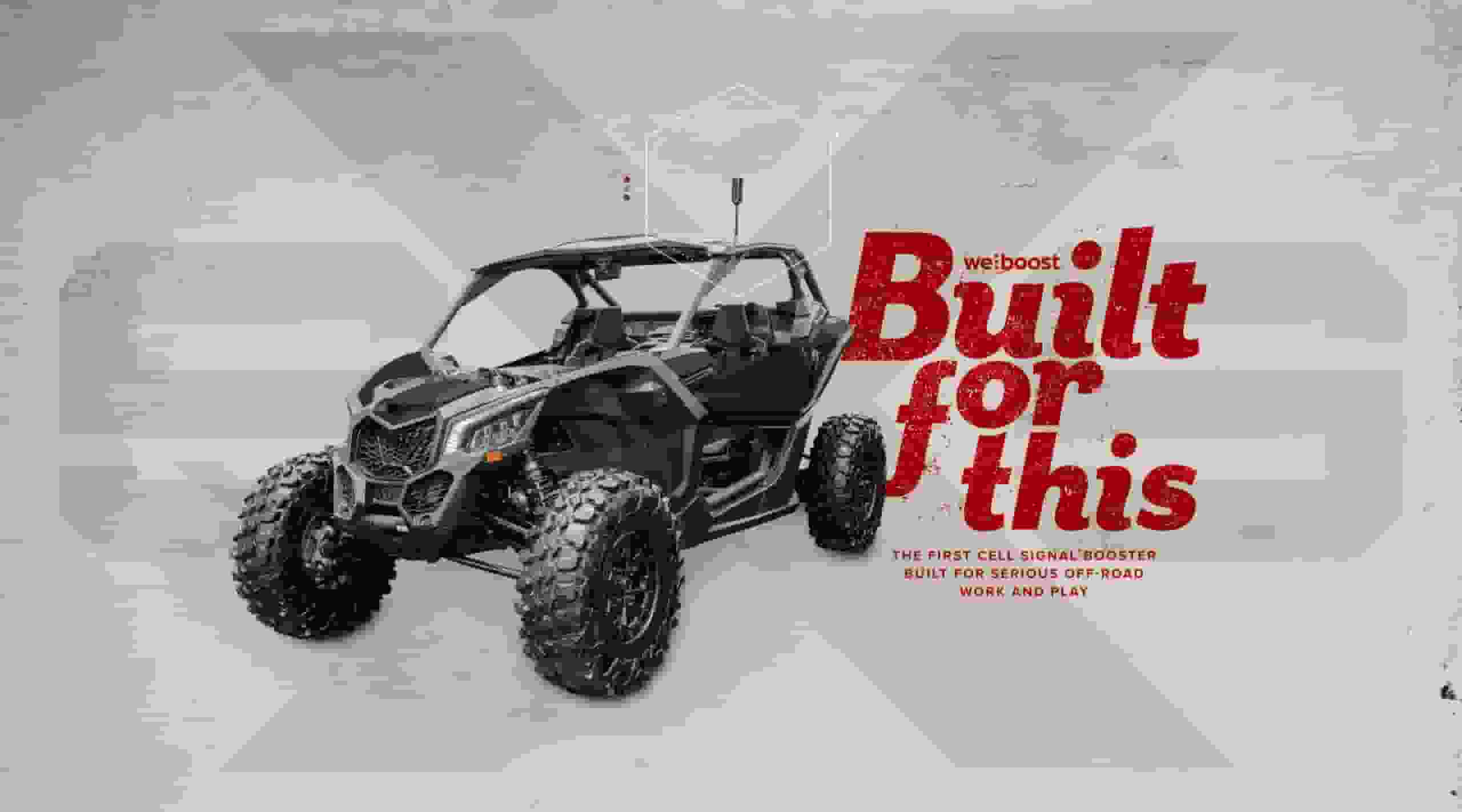
Sky is the world’s first vehicle signal booster engineered specifically to strengthen satellite direct-to-device connectivity. It brings the antenna outside the vehicle, amplifies supported Band 25 signal, and rebroadcasts that stronger connection back inside the cabin.
Why satellite connectivity gets harder inside a vehicle
Satellite-to-phone technology removes the need for a separate satellite phone or terminal, but the physics are still demanding.
A typical smartphone transmits at around 200 milliwatts. Sky can amplify that uplink to as much as 1 watt — 5X the transmission power of the phone alone.
That stronger uplink matters because getting a signal from the phone back to the network is often one of the hardest parts of maintaining a satellite connection.
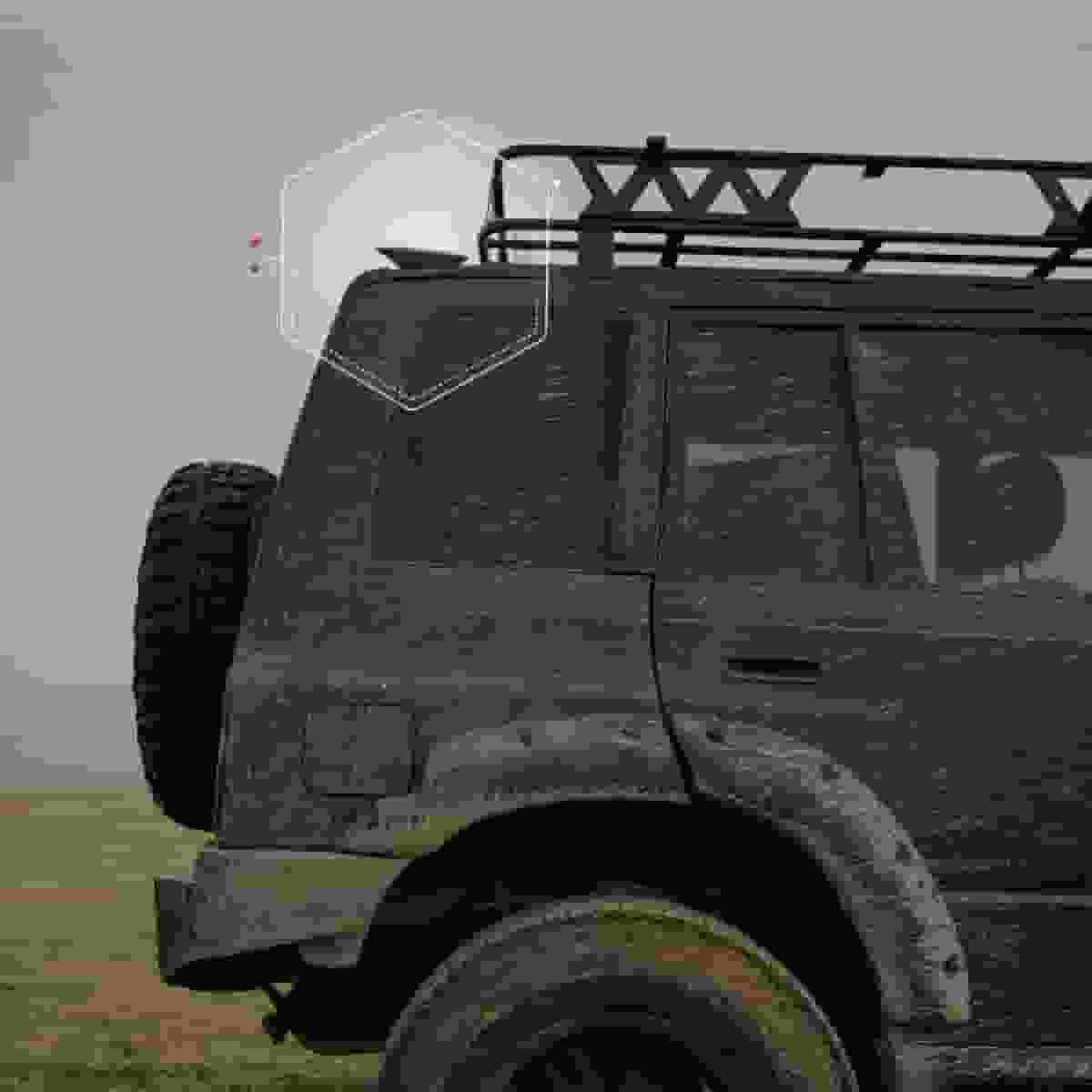
Sky also moves the antenna outside the vehicle enclosure, giving the system a better signal environment than a phone operating entirely from inside the cabin. An interior antenna then rebroadcasts the amplified signal back to compatible devices inside the vehicle.
How weBoost Sky works
Sky uses a simple three-part approach:
1. Receive and amplify outside the vehicle
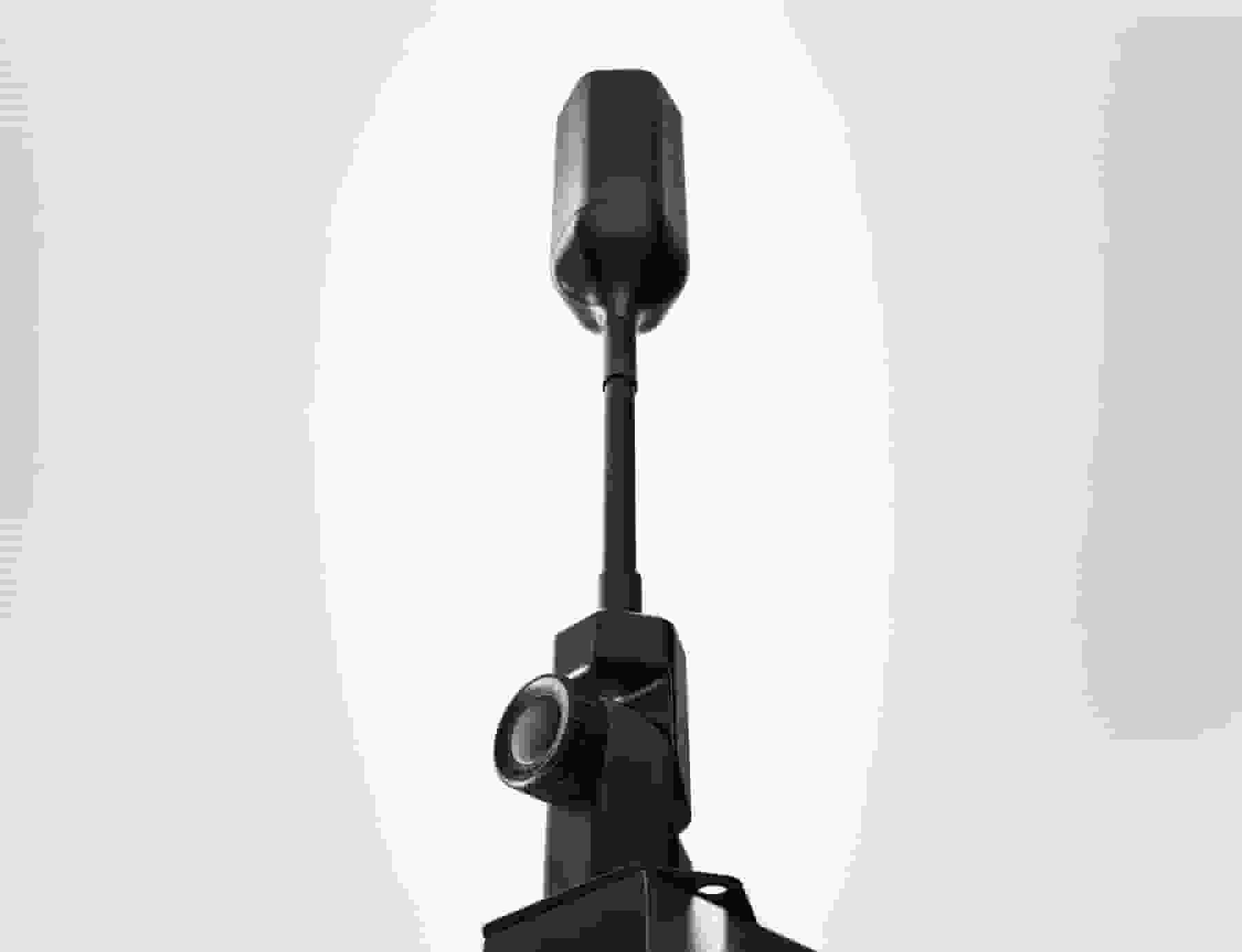
A roof-mounted antenna with an integrated booster receives and amplifies supported Band 25 signal.
2. Increase uplink power
Sky can increase the phone-to-network uplink to as much as 1 watt, helping reduce delays and failed sends when the connection is weak.
3. Rebroadcast the stronger signal inside
A slim in-cabin antenna brings the amplified signal back inside the vehicle for compatible devices.
The system draws less than 5 watts and is powered through USB-C. A 12V vehicle adapter is included for vehicles without built-in USB-C power.
Built for Band 25 — from towers to satellites
Sky is purpose-built around Band 25, the spectrum used for T-Satellite direct-to-device connectivity.
When supported terrestrial T-Mobile Band 25 coverage is available, Sky can amplify that signal. When terrestrial coverage disappears and a compatible device transitions to T-Satellite, Sky can strengthen the supported satellite connection using the same hardware.
That does not make Sky a replacement for a traditional multi-band vehicle booster.
Products such as Drive Reach and Dash are designed for broader conventional cellular coverage across supported carrier bands. Sky is the more specialized option when T-Satellite and Band 25 connectivity are the priority.
What we saw in field testing
Wilson Connectivity tested Sky outside St. George, Utah in weak T-Satellite conditions.
In one field test, signal strength improved from -116 dBm to -96 dBm RSRP, a 20 dB improvement. Signal-to-noise ratio also improved, helping turn an unreliable connection into a more dependable one for messaging, location sharing, and supported data applications.
View the weBoost Sky Field Test Results
Real-world results will vary based on sky visibility, terrain, foliage, weather, satellite availability, vehicle placement, and network conditions.
Tested in the Maine backcountry
Justin Fickett, founder of 207 Overland in Maine, tested a Sky prototype across remote areas with no terrestrial cellular coverage.
Under heavy tree cover, Fickett reported seeing anywhere from zero to one bar of T-Mobile satellite signal. During one test, the phone mounted inside the vehicle suddenly showed four bars.
The difference was Sky.
“Switch it off, the bars disappear. Switch it on, they come back.”
With the prototype active, Fickett also reported successful two-way texting and onX off-road map functionality that had not been consistently available before.
Who is weBoost Sky for?
Sky is designed for people who regularly travel where terrestrial coverage becomes unreliable or disappears altogether.
That includes rural drivers, overlanders, hunters, anglers, field teams, fleet operators, agriculture and utility crews, and anyone who wants a stronger supported connection from inside the vehicle when the nearest tower is no longer part of the equation.
For many of those users, the value of satellite direct-to-device technology is that it works with the smartphone they already carry. Sky is designed to strengthen that connection without requiring a separate satellite communications device.
What you need to use Sky
Sky does not add satellite capability to a phone that does not already support it.
You need:
- a compatible device
- eligible T-Satellite service
- supported Band 25 connectivity
Sky strengthens the connection between a compatible device and the network. It does not create T-Satellite service where device compatibility, service availability, satellite visibility, or network conditions do not support a connection.
Sky or a traditional vehicle booster?
The right product depends on the connection you are trying to improve.
Choose weBoost Sky when T-Satellite direct-to-device connectivity is the priority.
Choose Drive Reach or Dash when you want broader everyday cellular signal improvement across supported terrestrial carrier bands, with supported Band 25 connectivity as part of the overall system.
For customers who regularly move between both environments, understanding that distinction is important: Sky is a specialized Band 25 solution, while traditional weBoost vehicle boosters cover a broader range of cellular frequencies.
Go beyond the last tower
weBoost Sky brings decades of signal-boosting experience to a new kind of wireless connection.
By moving the antenna outside the vehicle, increasing uplink power, and strengthening supported Band 25 signal inside the cabin, Sky is designed to make T-Satellite connectivity more dependable in the places where traditional cellular coverage falls away.
weBoost Sky is available now for $149.99.